
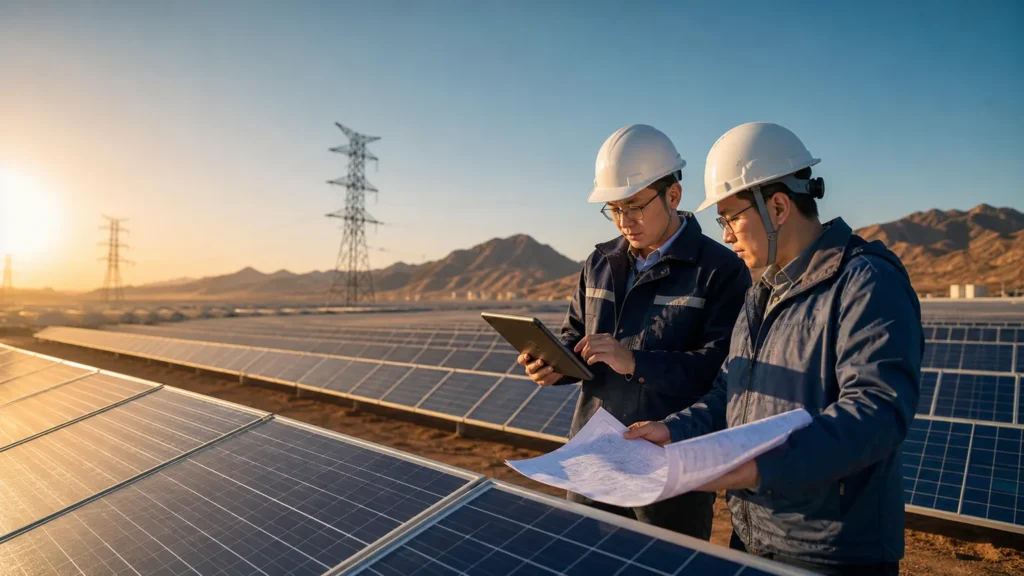
Overseas solar projects rarely fail because one component is missing. They usually become difficult when project development, EPC planning, equipment procurement, logistics and financing move on separate tracks. Early project integration brings those tracks together before the project enters the expensive execution stage.
Start from the project basis
A bankable delivery plan begins with a clear project basis: site conditions, grid access, target capacity, expected storage scope, land status, commercial structure and permitting timeline. If these inputs are still changing, equipment selection should remain flexible rather than locked too early.
Connect EPC and supply decisions
EPC teams need technical inputs from the supply side, while suppliers need installation and commissioning requirements from the EPC side. Coordinating module layout, inverter architecture, mounting design, cable routing, storage interface and testing responsibilities reduces rework later.
Control risk before procurement
Procurement is not only a price comparison. International projects require export documentation, factory schedules, packaging plans, inspection records, shipping windows and warranty responsibilities. A single coordination interface helps keep those items consistent.
Prepare for financing review
Lenders and investors usually review more than headline equipment brands. They also care about technical assumptions, performance guarantees, contract interfaces, certifications, insurance, O&M plans and delivery credibility. Integration makes those documents easier to defend.
For project owners, EPC partners and equipment manufacturers, the main value of early integration is certainty. It turns a collection of good resources into a delivery-ready project structure.