
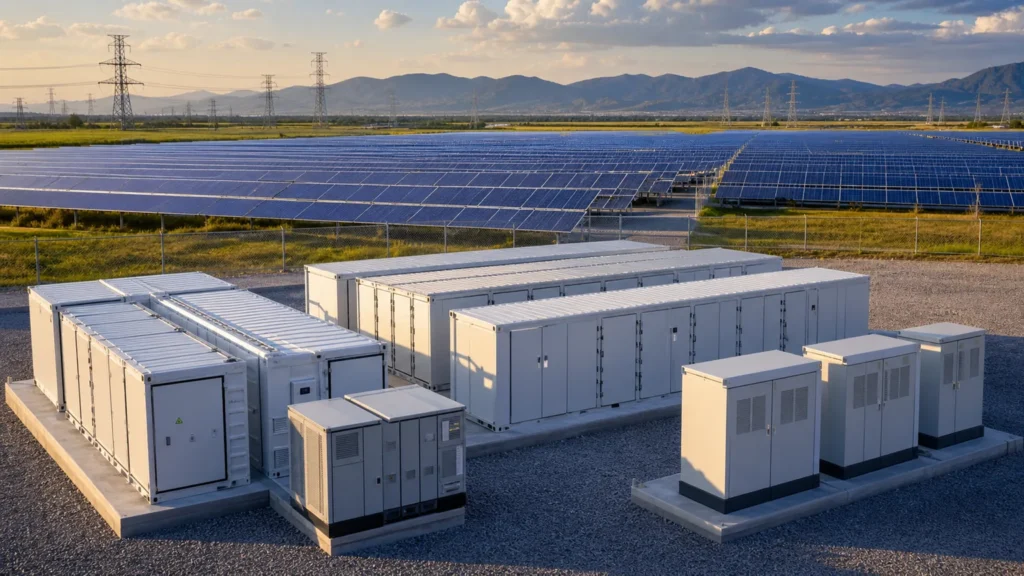
Solar-plus-storage projects are becoming standard in many overseas markets, but storage cannot be treated as an add-on container placed beside a PV plant. A bankable package requires battery, PCS, EMS, transformer, protection, fire safety, grid control and warranty interfaces to be designed as one system.
Define the storage use case first
The same MWh capacity can serve very different purposes: peak shaving, grid smoothing, backup power, curtailment reduction or hybrid microgrid operation. Each use case affects C-rate, cycling assumptions, PCS sizing, EMS logic and degradation modelling.
Match equipment at system level
Battery cells, racks, PCS, BMS and EMS must communicate reliably. Temperature control, fire suppression, enclosure rating, auxiliary power and site layout should be reviewed together. Compatibility matters more than comparing each item separately.
Clarify grid and control requirements
Many overseas projects face changing grid codes and utility review processes. Frequency response, active and reactive power control, ramp-rate limitation, black-start requirements and data reporting should be considered before procurement.
Prepare warranty and service logic
Storage warranties depend on operating profile, temperature, cycle depth and maintenance. A bankable package should define performance boundaries, monitoring responsibilities, spare parts, remote diagnostics and escalation channels.
When solar and storage are designed together, the project becomes easier to finance, deliver and operate. The goal is not simply to buy containers, but to build a coordinated energy system.